jueves, 3 de junio de 2010

Fitch lowers BP note that support has not been prepared for accident

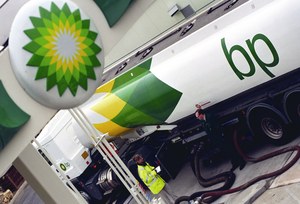
The financial rating agency Fitch downgraded the financial risks of BP saying the irrepressible effusion produced by one of its platforms in the Gulf of Mexico, an accident for which he was not prepared, as acknowledged on Thursday the director general of the British oil group .

Fitch said in a statement that downgraded from "AA +" to "AA" footnote negative outlook for British Petroleum (BP). These notes remain the group between "high-quality issuers."

"The downgrade of BP's note reflects Fitch's view on the increasing risks on the profile of activity and financial nature of BP after the accident Deepwater Horizon platform in the Gulf of Mexico," the agency said in a statement.Fitch notes that BP failed so far repeatedly in their attempts to stop the oil spill and returned to containment methods should be deployed and still are subject to weather problems, "referring to the frequent summer hurricanes in the Gulf of Mexico.
It also notes that drilling a relief well "may pose a risk and need extra time to be fully effective."
The news came after BP announced Thursday it will pay in full the $ 360 million needed for construction of six sections of artificial islands to protect Louisiana from the tide after the accident caused Deepwater Horizon.
"BP supports the U.S. government's decision to proceed with the construction of six sections" artificial island, said in a statement, adding that "the group will finance the $ 360 million to cost of construction."The oil group has already disbursed U.S. $ 1,000 million in cleanup and containment operations and all their attempts to cut the roots failed spill, arousing the anger of the authorities in Washington.

In the current situation, Fitch estimated at 2000-3000 billion cost of the cleanup operation this year although it depends on the amount of oil that reaches the U.S. coastline.Some analysts estimate that the total cost to the company could reach 20,000 million dollars.
The rating agency Moody's had lowered the May 5 to negative from stable the outlook for BP's credit note.
The CEO of BP, Tony Hayward admitted that the British oil group, which for a month and half combat the oil spill, was not prepared for such a problem at sea."No doubt that we did not have the tools we need in our toolbox," said BP chief said in remarks published Thursday by the Financial Times.
Although BP was considered "very successful" to prevent the spill from approaching the coast, agreed that "it was an entirely fair criticism" to say that the firm was not fully prepared for such spills in deep water.Hayward noted that after the catastrophe caused by the tanker Exxon Valdez in 1989, companies had created a body of appropriate response to contamination on the surface, the Marine Spill Response Corporation (MSRC).
"The challenge will be equipped with the same responsiveness in deep water," he said.

martes, 9 de marzo de 2010

ALICO AIG to sell its subsidiary Metlife by 15,500 million dollars

U.S. insurer AIG, rescued by the U.S. government sold its international subsidiary, Alico by 15,500 million dollars (11,350 million euros) to its domestic competitor Metlife, as reported by the company.
"The sale is an important step to settle the debt with the government," said AIG's chief executive, Harvey Golub, New York.
Metlife paid in cash and $ 6800 million will pay the rest in shares and other securities. By selling its subsidiary, AIG further reduced in size. Recently the group sold off its Asian subsidiary AIA, which sold for an amount of 35,500 million dollars to the British insurer Prudential.
The American taxpayer had to stump up more than 182,000 million in AIG to avoid collapse during the height of the financial crisis was the world's largest insurer.

Almost 80% of the company is in state hands. With the sale of certain of its subsidiaries, the new management team of AIG is to repay its debt and be independent again.

The subsidiary American Life Insurance Co. (ALICO) is one of the largest insurers in the U.S. and has the largest foreign operation. Alico, with its 12,500 employees, has about 20 million customers in 50 countries.
The buyer

With the transaction announced Metlife not only strengthens its position in the domestic market but also becomes one of the largest insurers in Japan, said MetLife chairman Robert Henrikson.
The long process was blocked due to taxes. Now, after reaching an agreement, the transaction is expected to occur later this year. Although they must first give its approval by the supervisory authorities of several countries antitrust because Alico has a presence in Europe, South America, Middle East and Africa, and in the U.S. and Asia.
AIG entered into a speculative spiral with complicated financial products that led her to lose 10,900 million last year. In 2008 came to throw the biggest losses of U.S. financial history, amounting to 99,300 million.

lunes, 8 de marzo de 2010

Yen and dollar fall, euro rises on worries about Greece

The yen and the dollar fell on Monday against the euro and high yielding currencies, as a jobs data better than expected U.S. on Friday and an easing in concerns drove the Greek debt investor demand for the risk.

The euro gained after encouraging remarks from key monetary authorities on the problems of debt in the euro zone. French President Nicolas Sarkozy vowed on Sunday that euro zone countries would help to Greece if they worsen their financial problems.

However, Managing Director International Monetary Fund, Dominique Strauss-Kahn, told Reuters it was unlikely that Greece's financial problems will spread to other euro area countries with high levels of debt.

Trust is kept up after a data on Friday showed job losses were less than expected, raising the view that the U.S. may be about creating jobs and affecting considered a refuge currency like the dollar and the yen.

"Greece is taking a breather from a market perspective, while the appetite for risk is driving the market. This gave the euro a bit of renewed support," said Niels From, analyst at Nordea in Copenhagen.
At 1049 GMT the euro was up 0.2 percent at $ 1.3642. Traders said that the level of short-term resistance was close to 1.3712, its highest March 4.

The dollar index was down 0.1 percent at 80.355.
Against the yen, the euro gained 0.2 percent to 123.25 yen, after hitting a two-month 123.80 yen on electronic trading platform EBS earlier.

The European Union is considering the establishment of a European Monetary Fund similar to the IMF

The European Union continues to underpin its strategy to address speculation against the currency and to articulate the rescue of countries such as Greece, may be threatened by a debt crisis. Now the European Commission is working with France and Germany to launch a European Monetary Fund, similar to the IMF, the head of the aid to these States.

In return, would set stricter penalties for countries that exceed the limits of deficit and debt, as the freezing of structural funds, the temporary withdrawal of voting rights at meetings of Council of Ministers of the EU and even the temporary suspension of its participation in the eurozone.

"The Commission is ready to propose this type of instrument for the EU", said Economic Affairs Commissioner, Olli Rehn, the German version of the newspaper Financial Times. "We are working closely with Germany, France and other countries," but warned that any aid that comes from this fund "should be tied to strict conditions.

The announcement of the new European Monetary Fund this weekend broke the German Finance Minister, Wolfgang Schäuble. "We are not planning a rival to the IMF, but we need an institution to ensure the internal balance of the eurozone it has at its disposal both the Fund's experience as comparable intervention mechanisms," Schäuble told the newspaper "Welt am Sonntag.

Both Brussels and Paris and Berlin have turned to Greece to attend the IMF for help and have insisted that the eurozone is itself to look for solutions.
Joint initiative to save Greece

French President Nicolas Sarkozy announced yesterday after meeting with Greek Prime Minister Giorgos Papandreou, his country prepares jointly with Germany and Greece, an initiative to combat speculative attacks inflicted on the country Hellene.
Everything suggests that the creation of this new agency would be part of the plan advanced by Sarkozy, but the president did not disclose any concrete steps and just make it clear that they would apply to have room to maneuver if necessary.

"I support stronger coordination of economic policies in the EU and the eurozone," said Schäuble. These statements involve a rapprochement of Germany, which has always resisted this increased cooperation, theses traditionally defended by France, that a genuine commitment to EU economic government. The agreement of the Franco-German paves the way for the proposal for a European Monetary Fund is approved by other EU partners.

The creation of the European Monetary Fund would be the most radical reform of the rules governing the operation of the eurozone since the single currency was launched in 1999. Some of these measures would require even a modification of the treaties, which may hinder its implementation through institutional reform fatigue following the difficulties in ratifying the Lisbon Treaty.

Iceland rejects massive debt payments to foreign savers

Icelanders have been rejected by a clear majority, the law allows compensation to nearly 300,000 British savers and Icesave bank Netherlands, which went bankrupt during the financial crisis.

According to the polls on foot urn after the referendum, the "no" reached 90% of the vote.

The agreement achieved by the Government in London and The Hague to compensate savers had generated a degree of popular resistance that led President, Olaffur Grimsson, to refuse to ratify the law regulating returns.
Grimmson made the decision after 56,089 people, a quarter of the electorate Island signed a petition against the law and asked to submit it to referendum.

The original agreement provided for returning the 3,700 million (5,000 million) of outstanding debt in 15 years and an interest rate of 5.5%.

Meanwhile, the Netherlands and the UK have made an offer considerably improved at a fixed rate and variable rate in the fourth quarter.
But despite that there was a better offer on the table, the referendum was conducted on the original proposal as it was passed by Parliament.The Icelandic prime minister, the Social Democrat Sigurdaóttir Jóhanna, favored to suspend the referendum and go for a new agreement, but the cancellation of the consultation was not possible without the approval of the opposition.

Sigurdaóttir announced that it would not participate in the vote to consider the referendum and no sense that, whatever its result would not change things at all because it is trying to negotiate a new agreement.
Key agreement for closer to Europe

Achieving implement an agreement with the Netherlands and the UK is key to Iceland because it would open the door to the possibility of receiving international aid and propel them closer to the European Union (EU).

But without a new enhanced agreement with the Netherlands and British creditors credits promised by the International Monetary Fund (IMF) and the countries of northern Europe would be blocked, which would put Iceland on a serious budget situation and the country would even the brink of bankruptcy.
Moreover, negotiations for joining the EU would be in danger of being swamped.
The rejected standard affects about 300,000 saved Netherlands and British who were attracted by high interest rates offered by Icelandic banks and that in the end were hard hit by the financial crisis.
The compensation of 34,000 German investors by the Kaupthing Bank already ruled in the summer.The cost of compensation to Icesave savers accounts for two thirds of Iceland's annual budget.
Proponents of the referendum have argued during the campaign that they want to achieve better conditions for the payment of debt.